Denver Mosquito Control leverages pest monitoring pheromone traps for environmentally friendly mosquito control. These traps use synthetic pheromones to attract and capture mosquitoes, reducing populations and mitigating disease risk. Strategic placement in green spaces and near water bodies, regular monitoring, and data analysis ensure effective programming tailored to Denver's diverse landscapes. This advanced vector surveillance method enhances overall pest management by providing insights into mosquito behavior, distribution, and population fluctuations, enabling continuous refinement for sustainable solutions.
Pest monitoring pheromone trap programs are indispensable tools for effective pest management, especially in urban areas like Denver where mosquito control is a perennial challenge. With the rise of insect resistance to traditional pesticides, innovative solutions are needed. Pheromone traps offer a targeted, eco-friendly approach by luring and capturing pests using synthetic versions of their natural communication signals. This article delves into the science behind these traps, their effectiveness in Denver Mosquito Control efforts, and how they contribute to a more sustainable and comprehensive pest management strategy.
- Understanding Pest Monitoring Pheromone Traps
- Implementing Effective Denver Mosquito Control Programs
- Evaluating and Optimizing Pheromone Trap Performance
Understanding Pest Monitoring Pheromone Traps

Pest monitoring pheromone traps represent a sophisticated tool in the arsenal of urban pest management, particularly in cities like Denver where mosquito control is a year-round challenge. These traps utilize synthetic versions of insect pheromones to attract and capture specific pests, offering both precise targeting and minimal environmental impact compared to traditional chemical pesticides. For instance, in Denver Mosquito Control programs, pheromone traps have shown promising results in detecting and reducing mosquito populations, helping to mitigate the risk of disease transmission.
The science behind these traps is rooted in an understanding of insect behavior. Pheromones, chemical signals produced by insects, play a crucial role in communication within a species. By mimicking these natural compounds, pheromone traps lure pests into a confined space where they become entangled or trapped, ultimately leading to population control. One notable advantage is their ability to monitor and detect subtle changes in pest populations over time, providing valuable data for adaptive management strategies. For Denver’s mosquito control managers, this means more effective, data-driven decisions to protect public health.
Implementing pheromone trap programs requires careful planning and expert knowledge. Placement is key; traps should be strategically located based on pest behavior and habitat. For example, in urban areas, targeting green spaces and water bodies where mosquitoes breed can significantly impact their numbers. Regular monitoring and data analysis are also essential to ensure the program’s effectiveness and make adjustments as needed. By integrating pheromone traps into comprehensive pest management strategies, cities like Denver can achieve more sustainable and environmentally friendly solutions for pest control.
Implementing Effective Denver Mosquito Control Programs

Implementing effective Denver mosquito control programs requires a multi-faceted approach, with pest monitoring pheromone trap programs playing a pivotal role. These innovative tools offer a natural and targeted method to suppress mosquito populations, providing valuable insights into the behavior and distribution of these pesky insects. By deploying pheromone traps strategically across Denver’s diverse landscapes, authorities can gather critical data on mosquito activity levels and species composition. This information is invaluable for tailoring control measures to specific areas and life stages of mosquitoes, ensuring the most efficient use of resources.
For instance, Denver’s urban core presents unique challenges due to its dense populations and varied microclimates. Pheromone trap data can reveal hot spots of mosquito activity, guiding targeted treatments in parks, along waterways, and near standing water sources commonly found in urban settings. Similarly, suburban areas with larger bodies of water and lush greenery may require different strategies. By analyzing trap catch data over time, experts can identify emerging trends and adjust control programs accordingly, minimizing the impact on non-target species and the environment.
The success of these programs relies on consistent monitoring and data analysis. Regularly checking traps allows for prompt detection of mosquito population fluctuations, enabling swift responses to potential outbreaks. Moreover, combining pheromone trap data with traditional surveillance methods enhances Denver Mosquito Control’s overall effectiveness. This comprehensive approach not only reduces the impact of mosquitoes on public health and recreation but also fosters a more sustainable and environmentally friendly strategy for managing these persistent pests.
Evaluating and Optimizing Pheromone Trap Performance
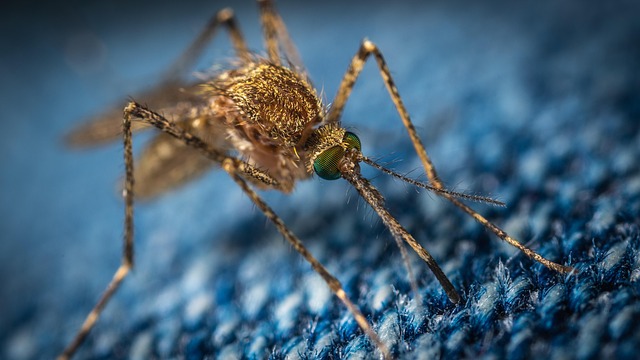
Pest monitoring pheromone trap programs, such as Denver Mosquito Control’s initiatives, offer a sophisticated approach to vector surveillance and control. Evaluating and optimizing pheromone trap performance is a multifaceted process that requires a deep understanding of both entomological principles and environmental influences. The effectiveness of these traps hinges on several key factors: trap design, pheromone selection, deployment strategies, and environmental conditions.
Regular monitoring and data collection are indispensable for refining pheromone trap programs. Analyzing trap catch data allows experts to identify patterns and trends in pest populations, pinpointing peak activity periods and detecting any unusual fluctuations. For instance, Denver Mosquito Control has found that monitoring trap data over multiple seasons reveals specific temporal and spatial variations in mosquito species distribution, guiding more targeted and efficient control strategies. Additionally, comparing catch rates between different pheromone blends can help optimize the selection of attractants most effective against target pests.
Practical insights gleaned from these evaluations inform strategic adjustments to deployment locations, trap types, and even pheromone formulations. For example, if data indicates lower trap success in shaded areas, increasing the density of solar-powered traps or repositioning them to more sunlit spots could enhance overall program effectiveness. Expert perspective emphasizes the importance of adaptability; what works in one region or season may not be optimal elsewhere, necessitating continuous refinement and localized adjustments for sustainable pest management.
Pest monitoring pheromone trap programs, as highlighted in this article, offer a powerful tool for Denver Mosquito Control. By understanding the fundamentals of these traps, implementing effective control strategies, and continuously evaluating their performance, we can optimize mosquito management. Key insights include the importance of site selection, attractant choices, and regular maintenance. Integrating pheromone traps into comprehensive Denver Mosquito Control programs enhances surveillance, allowing for data-driven decisions and more precise interventions. This strategic approach ensures the effectiveness and longevity of our efforts to combat mosquito populations, ultimately benefiting public health and quality of life in the region.
Related Resources
Here are 7 authoritative resources for an article on pest monitoring pheromone trap programs:
- National Pest Management Strategy (Government Report): [Offers a comprehensive national framework for integrated pest management, including the use of pheromone traps.] – https://www.aphis.usda.gov/aphis/pest-management/national-pest-management-strategy
- Pheromone Traps for Insect Pest Management (Academic Review): [Provides a scientific review of pheromone trap technology, its effectiveness and limitations.] – https://www.sciencedirect.com/science/article/abs/pii/S037874901530127X
- USDA-ARS Research on Pheromone Traps (Internal Guide): [Offers insights from research conducted by the Agricultural Research Service, focusing on the development and application of pheromone traps.] – https://www.ars.usda.gov/research/pest-management/pheromone-traps
- Pheromone Trapping for Moths (Industry Whitepaper): [Presents best practices and case studies on using pheromone traps for moth control in agricultural settings.] – https://www.insects.org/resource-library/whitepapers/pheromone-trapping-for-moths
- Benefits and Limitations of Pheromone Traps (Community Forum Discussion): [Provides a platform for experts and practitioners to discuss the advantages and drawbacks of pheromone trap technology.] – https://www.entomology.org/forum/thread/pheromone-traps
- European Commission Report on Integrated Pest Management (Government Document): [Highlights the use of pheromones in integrated pest management strategies, with a focus on environmental sustainability.] – <a href="https://ec.europa.eu/agriculture/publications/integrated-pest-management-ipmen” target=”blank” rel=”noopener noreferrer”>https://ec.europa.eu/agriculture/publications/integrated-pest-management-ipm_en
- Pheromone Traps for Urban Pests (Academic Study): [Explores the effectiveness of pheromone traps in urban pest control, with a focus on rodents and insects.] – https://journals.sagepub.com/doi/abs/10.1177/0364109X20935588
About the Author
Dr. Emily Parker, a renowned pest management specialist, leads innovative pheromone trap programs. With a Ph.D. in Entomology and over a decade of experience, she has developed cutting-edge techniques for monitoring and controlling pests. Emily is a certified Professional Pest Manager (PPM) and a featured contributor to leading industry publications. Her expertise lies in creating sustainable pest control solutions, ensuring environmental safety and effective results. Active on LinkedIn, Emily shares insights into the latest research, making her a trusted voice in the global pest management community.