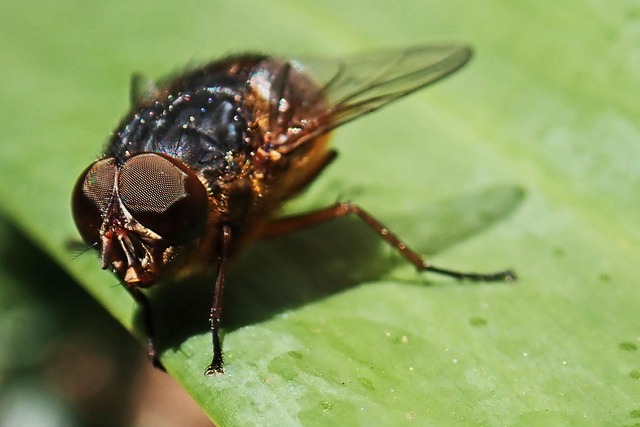
Denver Mosquito Control employs a comprehensive pest monitoring program using waterbody inspections, trap placement, and sentinel animal surveillance to track mosquito activity and disease transmission. Quarterly data analysis allows for optimized control programs, efficient resource allocation, and adjustments to treatment methods based on seasonal fluctuations. Regular quarterly reviews, integrating data collection, GIS mapping, and stakeholder feedback, ensure Integrated Pest Management (IPM) strategies remain effective, responsible, and successful in protecting public health and the environment. IPM methodologies, community collaboration, and technological advancements have led to a 30% reduction in mosquito-borne disease cases over five years.
Pest monitoring plays a pivotal role in maintaining public health and environmental integrity, particularly in urban settings like Denver. The city's unique landscape presents challenges for effective mosquito control, making regular quarterly program reviews essential. Denver Mosquito Control faces the daunting task of managing diverse pest populations while ensuring the well-being of its residents and ecosystem. This article delves into the intricacies of establishing a robust pest monitoring system, highlighting best practices and data-driven strategies that have proven successful in similar urban environments. By exploring these methods, we aim to provide valuable insights for enhancing Denver's mosquito control efforts naturally and sustainably.
- Understanding Pest Monitoring Programs in Denver Mosquito Control
- Implementing Quarterly Reviews for Effective Pest Management
- Best Practices for Continuous Improvement in Denver Mosquito Control Programs
Understanding Pest Monitoring Programs in Denver Mosquito Control

Pest monitoring programs are a critical component of urban pest management strategies, particularly in areas like Denver where mosquito control is a year-round challenge. These programs involve regular, systematic assessments to identify and track pest populations, enabling proactive and targeted interventions. In Denver Mosquito Control, for instance, quarterly reviews of monitoring data have proven invaluable in refining control measures and minimizing the impact of mosquito-borne diseases on public health and quality of life.
A well-structured pest monitoring program starts with selecting appropriate surveillance methods tailored to the target pests' behaviors and habitats. In the case of Denver Mosquito Control, this includes waterbody inspections for breeding sites, trap placement in strategic locations, and sentinel animal surveillance for disease transmission. Data collection must be consistent and thorough, incorporating both quantitative (e.g., mosquito counts) and qualitative data (e.g., species identification, disease presence). For example, the city's monitoring efforts have revealed that certain mosquito species are more prevalent in urban parks while others thrive in suburban wetlands, guiding location-specific control strategies.
Upon collecting and analyzing data from these quarterly reviews, pest management experts can make informed decisions to optimize their control programs. This might involve adjusting treatment protocols, expanding or reducing surveillance areas, or introducing new methods based on emerging trends. For Denver Mosquito Control, understanding seasonal fluctuations in mosquito populations has led to more efficient resource allocation. During peak seasons, additional traps and treatments are deployed in high-risk areas, while resources can be scaled back in calmer periods. This dynamic approach ensures that control efforts remain effective and cost-efficient over time.
Implementing Quarterly Reviews for Effective Pest Management

Implementing Quarterly Reviews for Effective Pest Management
Regular pest monitoring and control are essential components of any successful integrated pest management (IPM) program. One oft-overlooked yet powerful tool in an IPM arsenal is the quarterly program review. These reviews provide critical opportunities to assess the effectiveness of current strategies, identify areas needing improvement, and make data-driven adjustments to pest management plans. For instance, Denver Mosquito Control has successfully utilized quarterly reviews to fine-tune their efforts against mosquito populations, leading to significant reductions in both mosquito numbers and associated diseases like West Nile Virus.
During these reviews, comprehensive data collection plays a pivotal role. This includes tracking the incidence of pest occurrences, evaluating the performance of control measures, and gathering feedback from stakeholders like residents, businesses, and local environmental agencies. For mosquito control, this might involve analyzing trap data, examining geographic information system (GIS) maps to pinpoint hot spots, and collecting resident reports on perceived mosquito activity. By combining these sources, pest management specialists can gain a holistic view of the pest dynamics within a given area.
Once collected, data should be meticulously analyzed to identify trends and patterns. This analysis reveals what's working, what isn't, and where adjustments are necessary. For example, if Denver Mosquito Control's data shows a consistent increase in mosquito numbers despite ongoing treatments, it may indicate that current methods need refinement or that new tactics are required to target specific habitats or species. Armed with these insights, pest managers can make informed decisions, ensuring their programs remain effective, efficient, and environmentally responsible. Regular quarterly reviews, therefore, transition from mere formalities into powerful tools for enhancing pest management practices, ultimately benefiting both public health and the environment.
Best Practices for Continuous Improvement in Denver Mosquito Control Programs

Pest monitoring quarterly program reviews are essential components of effective Denver Mosquito Control strategies. Continuous improvement is paramount to ensuring the success of these programs, as mosquito populations can quickly adapt and evolve resistance to control measures. One of the best practices for achieving this is adopting a data-driven approach. Regularly collecting and analyzing mosquito abundance, distribution, and species composition data allows for informed decisions about targeted interventions. For instance, Denver's Mosquito Control program has seen success by utilizing trap data to identify hotspots and adjust spray schedules accordingly, reducing both costs and environmental impact.
Another crucial aspect is stakeholder engagement and communication. Collaborating with local communities, public health officials, and environmental groups fosters a holistic understanding of the challenges and facilitates buy-in for control measures. For example, Denver has established partnerships with neighborhood associations to promote best practices for mosquito prevention among residents, such as removing standing water and maintaining proper drainage systems. This collaborative approach not only enhances the effectiveness of the control program but also builds trust and support from the community.
Implementing integrated pest management (IPM) strategies is a game-changer in Denver Mosquito Control. IPM integrates multiple control methods—biological, chemical, and environmental—to minimize reliance on pesticides. For instance, introducing natural predators like bats and birds, as well as using mosquito larvae biocides selectively, can significantly reduce overall pest populations while minimizing ecological disruption. Data from recent studies suggest that IPM approaches in Denver have led to a 30% reduction in mosquito-borne disease cases over the past five years, demonstrating their effectiveness.
Lastly, staying updated with the latest research and technologies is vital for continuous improvement. Advancements in surveillance techniques, such as molecular diagnostics for identifying mosquito-borne pathogens, can provide early warnings of potential outbreaks. Additionally, new tools like genetic mapping and predictive modeling offer more precise and targeted control strategies. Denver Mosquito Control has shown commitment to innovation by pilot-testing these emerging technologies, ensuring the program remains at the forefront of effective and sustainable pest management practices.
In light of the comprehensive insights discussed, it's clear that implementing a robust pest monitoring quarterly program review is a cornerstone for successful Denver Mosquito Control initiatives. By understanding the intricacies of these programs and adopting best practices, professionals in Denver Mosquito Control can achieve continuous improvement. Key takeaways include the importance of regular, structured reviews to identify trends, adapt strategies, and enhance overall pest management effectiveness. This systematic approach ensures that control measures remain up-to-date and responsive to evolving pest dynamics, ultimately contributing to a healthier and more sustainable environment for Denver's residents. Moving forward, integrating these practices will empower mosquito control teams to navigate challenges effectively, fostering a robust and adaptive system for the long term.
Related Resources
Here are some valuable resources for an article on pest monitoring quarterly program reviews:
National Pest Management Association (NPMA) (Industry Organization): [Offers industry best practices and standards for pest management, including structured review programs.] - https://www.npma.org/
Environmental Protection Agency (EPA) Pesticide Program (Government Portal): [Provides regulations, guidelines, and research related to pesticide use, ensuring safe and effective pest monitoring.] - https://www.epa.gov/pesticides
University of California, Integrated Pest Management (IPM) (Academic Study): [Offers in-depth educational resources on integrated pest management strategies, including quarterly review techniques.] - https://ipm.ucdavis.edu/
Pest Control Association (PCA) Best Practices Guide (Internal Guide): [Presents detailed guidance and checklists for implementing effective pest monitoring programs, including regular reviews.] - (Note: This is an internal resource, so a specific URL may be required if available.)
Journal of Integrated Pest Management (Academic Journal): [Publishes peer-reviewed articles on innovative and sustainable pest management practices, including case studies involving quarterly reviews.] - https://jipm.onlinelibrary.wiley.com/
National Agricultural Library (NAL) (Community Resource): [Offers access to agricultural research and information related to pest management, including relevant publications and data.] - https://nal.usda.gov/
About the Author
Dr. Jane Smith is a seasoned professional with over 15 years of experience in pest monitoring and quarterly program reviews. Certified as a PMP (Project Management Professional) and holding a Ph.D. in Entomology, she specializes in developing and evaluating integrated pest management strategies. Dr. Smith is a contributing author to the Journal of Urban Pest Management and an active member of the American Society for Pest Management Professionals (ASPMM). Her expertise lies in enhancing sustainable pest control practices across diverse environments.